
Welcome!
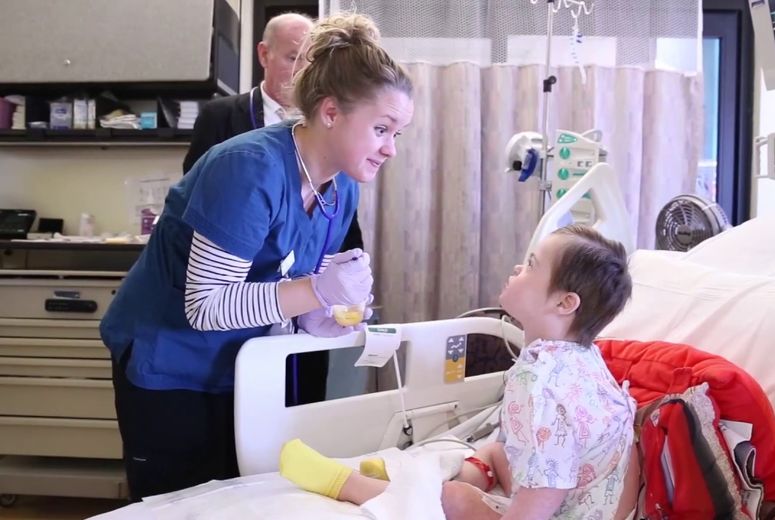
The Master of Science in Communication Sciences and Disorders program at Loma Linda University is a seven-quarter, full-time program designed to prepare students for success as speech-language pathologists. The curriculum blends advanced coursework with supervised clinical experiences across medical, educational, and community settings, ensuring graduates develop the knowledge and hands-on skills required for effective practice. Students also gain exposure to specialty clinics, research opportunities, and interprofessional collaboration, building a strong foundation for leadership in the field. Upon completion, graduates are eligible for California licensure, the Preliminary Speech-Language Pathology Services Credential, and ASHA certification.
Schedule a Consultation Request INFORMATION
Why Choose LLU's M.S. Program in Communication Sciences and Disorders?
-
Early and Diverse Clinical Experience – Begin hands-on training in specialty clinics and community settings during your first quarter.
-
Small Cohort Model – Benefit from personalized attention, strong faculty mentorship, and a collaborative learning environment.
-
Graduate Assistantship Opportunities – Gain valuable experience and financial support through on-campus roles.
-
Faith and Mission Focus – Learn in a values-driven environment that emphasizes compassionate service and whole-person care.
The Loma Linda Difference
The Master of Science in Communication Sciences and Disorders program at Loma Linda University is grounded in our historic institution’s pillars, preparing students to approach their profession with integrity, compassion, and a commitment to holistic care. The program reflects LLU’s dedication to nurturing mind, body, and spirit in both learning and practice.
Just a few ways LLU’s pillars shape your graduate experience include:
-
Whole-Person Care – Emphasis on integrating physical, mental, and spiritual well-being in professional practice.
-
Mission and Service – Opportunities to serve local and global communities while applying ethical and compassionate care.
-
Excellence in Education – Access to rigorous academics, interprofessional collaboration, and mentorship across disciplines.
Program Overview
Admissions Requirements
Bachelor’s degree in speech-language pathology, communicative disorders, or equivalent coursework (see Master of Science–Transitional Program)
Completion of a post-baccalaureate program (documentation required)
Minimum cumulative GPA of 3.0, with at least a 3.3 GPA in the last 96 quarter or 64 semester unit
Personal statement (submitted online)
Three letters of recommendation, preferably academic
Official transcripts from all colleges and universities attended
Interview including writing sample and written communication assessment (by invitation)
GRE and Basic Skills exams (e.g., CBEST) are not required
Students admitted to the MS program must complete a minimum of one undergraduate course in each of the following areas within one year of graduation: biological sciences (e.g., biology or human anatomy), physical sciences (e.g., physics or chemistry), statistics and/or research methods, and the social/behavioral sciences (e.g., psychology, sociology, or educational psychology).
*These ASHA-required courses must be completed prior to the completion of the Clinical Fellowship Year (CFY).
Program Resource Links
Application Process
The application opens on October 1 and must be completed by January 1 for admission to the following fall quarter. The admissions committee reviews applications in early January and sends interview invitations in late January. Interviews and written communication assessments are conducted in February, with admission decisions typically released 3 to 4 weeks later, usually in early March.
Transcript Submission Address
Official transcripts must be sent directly to:
Loma Linda University
Admissions Processing
11139 Anderson Street
Loma Linda, CA 92350
Important Dates
October 1 — Application opens
January 1 — Application deadline (all materials must be submitted)
Early January — Admissions committee begins reviewing applications
Late January — Interview invitations sent
February — Interviews and written communication assessments conducted
Early March — Admission decisions released
April 15 — Deadline to submit $200 confirmation deposit
Early June — Teams group access for accepted students
First week of September — Course registration opens
Last Monday in September — Program begins
After Acceptance
Accepted students receive notification by mail and email, which includes a link to submit a $200 confirmation deposit online. This deposit must be paid by April 15 to secure enrollment. After acceptance, there is a 4- to 5-month waiting period before the program begins on the last Monday in September.
In early June, accepted students are added to a Teams group for updates and networking. In August, registration instructions are sent, and course registration opens during the first week of September. Students must not schedule vacations during September, as required pre-session events occur before the start of the program. Exact dates for these events are provided by the Director of Clinical Education.
Normal time to complete the program is 2 years (7 academic quarters). Full-time enrollment is required. All students in a cohort matriculate through all courses in a block, meaning everyone is registered for the same courses each quarter (there are a few course exceptions).
- CMSD 511 Graduate Portfolio I (2 units). The first in a series of two courses that provides students with a format for demonstrating their acquisition of the knowledge and skills that prepare them for entry into the profession. Students learn the requirements for professional accreditation and certification, and of licensing entities; and develop a professional portfolio. Emphasizes ethical, business, and legislative considerations in speech-language pathology
- CMSD 512 Graduate Portfolio II (1 unit). The second in a series of two courses that teaches students the requirements for professional accreditation and certification, and of licensing entities; and that helps them continue to develop an organized means of demonstrating the knowledge and skills acquired during their graduate program. Requires development of a professional portfolio.
- CMSD 523 Seminar in Early Childhood Language Disorders (3 units). Addresses the principles and procedures in assessment and interventions of language disorders in children. Emphasizes early language learners (birth to 3 years).
- CMSD 525 Seminar in School-Aged Child Language Disorders (3 units). Addresses the principles and procedures of assessment and intervention of preschool, primary, and adolescent school-age children with language disorders. Emphasizes school-age learning in the areas of semantics, syntax, pragmatics, narrative, and phonological awareness.
- CMSD 535 Voice Disorders (3 units). Discusses diagnosis and intervention techniques used with children and adults displaying a variety of voice disorders. Includes demonstration and operation of instrumentation used for physiological and acoustic analysis of abnormal voice production.
- CMSD 545 Issues in School Speech-Language Pathology (3 units). Addresses issues confronted by school speech-language pathologists, including PL 94-142, IDEA, NCLB, planning for and conducting IEPs, scheduling, and caseload management, evaluating and assessing students from diverse backgrounds, due process, and advocating for students.
- CMSD 554 Swallowing Disorders (3 units). Lecture and discussion of the speech- language pathologist's role in the diagnosis and treatment of swallowing disorders in children and adults. Addresses ethical and cultural issues. Emphasizes analysis of current literature and clinical applications. Selected laboratory experiences.
- CMSD 564 Seminar: Aural Rehabilitation and Cochlear Implants/Hearing Aids (3 units). Studies the mechanisms for achieving hearing rehabilitation, including amplification, speech reading, auditory training, hearing-aid orientation, and speech conservation. Considers hearing-aid function and philosophies of rehabilitation for the hearing impaired (e.g., auditory, aural, manual, and total communication).
- CMSD 567 Clinical Practice in Speech-Language Pathology and Audiology, Advanced (1-6 units). Supervised practice in diagnosis and therapy. Students register for this clinic to participate in several specialty clinics offered in the program including but not limited to autism, voice disorders, aural habilitation, fluency, speech sound disorders, and accent modification.
- CMSD 575 Instrumentation in Speech and Hearing (1 unit). Lecture, discussion, and laboratory experience in the areas of speech acoustics, speech production and perception, psychoacoustics, and speech and hearing physiology.
- CMSD 576 Instrumentation II (1 unit). Guides students through practical application of theoretical information acquired in CMSD 575 regarding speech instrumentation. Individually paced, with guided assistance, so that student can complete competency on selected speech instrumentation.
- CMSD 586 Educational Fieldwork I (1 unit). Initial supervised therapy on the elementary and/or secondary level and/ or in a classroom for the severely language- handicapped child.
- CMSD 587 Counseling in Communication Disorders (3 units). Explores the counseling role of the speech-language pathologist and identifies clinician responsibilities in working with individuals of different cultures, ethnicity, gender, age, and belief systems.
- CMSD 588 Educational Fieldwork II (8 units). Full-time supervised therapy on the elementary and/or secondary level and/or in a classroom for the severely language- handicapped child (taken during 2nd year).
- CMSD 596 Medical Fieldwork I (1 units). Initial supervised clinical practice in a medical center, rehabilitation facility, or skilled nursing facility (taken during 1st year).
- CMSD 597 Medical Fieldwork II (8 units). Full-time supervised clinical practice in a medical center, rehabilitation facility, or skilled nursing facility (taken during 2nd year).
- CMSD 598 Research Methods & Professional Literature in CSD (3 units). Lecture and discussion that facilitates the student's ability to read and interpret professional literature, develop research ideas, and develop professional writing skills.
- CMSD 679 Seminar: Motor Speech Disorders/Augmentative Communication (3 units). Problem-based learning seminar that focuses on etiology, characteristics, evaluation, and treatment of motor speech disorders, including the dysarthrias and apraxia.
- CMSD 682 Seminar: Traumatic Brain Injury (3 units). Explores pathophysiology, diagnosis, and rehabilitation of cognitive communication disorders in children and adults with traumatic closed head injuries. Lecture and discussion format emphasizes reading current professional literature and developing skills in formal and informal assessment and functional treatment.
- CMSD 684 Seminar: Adult Language Disorders (3 units). Problem-based learning seminar that focuses on etiology, characteristics, evaluation, and treatment of acquired adult language disorders.
- CMSD 685 Seminar: Stuttering (3 units). Provides practical instruction in assessment and remediation with individuals who stutter and/or clutter.
- CMSD 687A Seminar: Open Seminar (2 units). This is a one-unit course which students register for twice (seminars on different topics each time). This seminar facilitates students' advanced study of current issues in the diagnosis and treatment of communication disorders. Examples of typical topics include pediatric swallowing, right hemisphere, augmentative alternative communication
- CMSD 687B Seminar: Open Seminar (2 units). This is a one-unit course which students register for twice (seminars on different topics each time). This seminar facilitates students' advanced study of current issues in the diagnosis and treatment of communication disorders. Examples of typical topics include trachs and vents and cleft palate.
- CMSD 688 Seminar: Speech Sound Disorders - Advanced (3 units). Typical development of phoneme acquisition and use. Explores etiology, characteristics, assessment and treatment of articulation and phonological disorders and differences in children.
- CMSD 697 Research (1 unit). Students register for this course when they are completing their research projects, following the proposal process and data collection. Upon registering for this course students will write results and discussion and prepare for oral presentation at Research Symposium.
- Religion course (Ethics) (3 units). Students are required to take one ethics course offered through the Department of Religion. The course varies each year and is selected for the entire cohort by the graduate program director.
Total Units: 72
Also required is successful completion of:
- Research Symposium Presentation
- Competency-based Assessments
Clinical Practicum
Graduate students are eligible for clinical practicum if they:
Maintain a minimum 3.0 GPA with no grade below C
Provide documentation of current CPR certification
Provide the CA CTC Certificate of Clearance
The Director of Clinical Education assigns students to clinical sites each quarter. First-year students are placed in at least one clinic per quarter, including summer, with schedules ranging from ½ day to 3½ days per week plus preparation and supervision.
Students rotate through specialty clinics such as autism, phonology, voice, early intervention, stuttering, and school-age speech sound disorders.
After successful completion of first-year clinics, students advance to CMSD 597 Fieldwork II and CMSD 588 Educational Fieldwork II during the second year. Completion of Fieldwork II is required before assignment to the second experience.
Some students may need to complete one or both final quarters out of state. Advance notice is given for planning purposes.
Praxis Exam
Required for ASHA Certification, CA License, and CA School Credential. A passing score of 162 is needed. The exam can be taken during or after the program. Details: www.ets.org/praxis.
Progress Reviews & Remediation
Student progress is reviewed quarterly with written feedback and annual advisor meetings.
Retaking a course is offered at half tuition but may delay program completion.
Students who fail clinical expectations must repeat the practicum and follow an individualized remediation plan.
Clinic Orientation
Clinic Orientation begins in mid-September, covering clinic procedures, program details, and preparation for speech-language and hearing screenings.
Clinic Bootcamp
Held over 3–4 days following program orientation, this training equips students with the skills needed for clinical success.
Speech-Language & Hearing Screenings
All new graduate students participate in multiple screening days before the fall quarter begins. Assignments and schedules are provided by the Director of Clinical Education.
Program Learning Outcomes (PLO's)
Students meet the following learning outcomes:
- Synthesize information regarding characteristics & etiologies of communication disorders and differences and swallowing disorders in children and adults.
- Integrate skills in assessment of human communication disorders and differences in swallowing disorders with a variety of clinical populations.
- Plan and implement an intervention program for a variety of clinical populations across the age span.
- Critically apply research design, statistical analyses, and interpretation of literature related to evidence-based practice and specific research topics.
- Incorporate cultural responsiveness to diversity (e.g., linguistic, neurological, economic, age, sexual, gender, ability, racial) within academic and/or professional environments.
- Implement counseling principles and practices related to the discipline of speech-language pathology across the lifespan.
- Identify, discuss, and apply service-learning principles (specifically cooperation, critical reflection, and discipline-specific application through engaged partnership with the community.
- Incorporate basic components of professional ethics in academic scenarios regarding treating, counseling, advocating for, and documenting care for clients.
On-time Program Completion Rates
| Period | # Completed with Expected Time Frame | # Completed Later than Expected Time Frame | # Students who did not Complete Program | % Completed within Expected Time Frame |
| 2026 | 33 | 3 | 0 | 91% |
| 2025 | 32 | 0 | 1 | 97% |
| 2024 | 33 | 1 | 0 | 97% |
Praxis Examination Pass Rates of Test-takers
| Reporting Period | # Taking the Exam | # Passed Exam | % Passed Exam Rate |
| 2026 | 43 | 36 | 84% |
| 2025 | 17 | 15 | 88% |
| 2024 | 22 | 18 | 82% |
The Essential Functions for Students refers to a guide of behavioral or cognitive functions that an individual must be able to perform, with or without accommodations, during their academic and clinical experiences. This list was developed based on recommendations by the Council of Academic Programs in Communication Sciences and Disorders (CAPCSD). The skills listed below have been determined by Loma Linda University’s Department of Communication Sciences and Disorders to be skills that are necessary to demonstrate competencies that will lead to graduation and a successful entry into professional practice. While some of the Essential Functions listed may already be present, this program will introduce new skills and further develop current skills to prepare students for successful navigation as professionals.
PHYSICAL ABILITIES
- Participate in classroom or clinical activities for two to four-hour blocks of time, with one or two breaks.
- Move independently to, from, and in academic/clinical facilities with or without a personal assistance device such as a wheelchair or braces.
- Manipulate diagnostic and intervention materials and technology without violating the integrity of testing protocols and best therapeutic practices.
- Respond quickly and provide a safe environment for clients and others in emergency situations, including but not limited to fire, choking, client elopement, etc.
- Review and interpret instrumentation and monitor client responses.
- Execute movements required to document academic (e.g., note taking) and clinical (e.g., data collection during therapy, clinical report writing, note taking during client interviewing) information via computer or handwritten notes with acuity, accuracy, and efficiency.
COGNITIVE ABILITIES
- Possesses reading and writing skills sufficient to comprehend, retain, synthesize, infer, evaluate, and apply received information necessary to meet curricular and clinical demands.
- Independently analyze, synthesize, and interpret ideas and concepts in academic and clinical settings with or without reasonable accommodations that may apply to a professional environment.
- Maintain attention and concentration for sufficient time to complete academic/clinical activities, within stated deadlines.
- Adapt evaluation and intervention activities in response to a client’s abilities and cultural needs in clinical and academic tasks.
- Engage in self-analysis to identify strengths and areas for improvement and seek to develop a plan to address academic and clinical needs.
- Identify and professionally advocate for one’s own need for support and resources to fulfill clinical and academic tasks.
COMMUNICATION ABILITIES
- Possess oral, written, auditory, and non-verbal communication skills sufficient to meet academic and clinical competencies.
- Communicate proficiently in oral and written English language.
- Perceive and demonstrate non-verbal communication that is appropriate to culture and context.
- Modify communication style to meet the communication needs of clients, caregivers, and other persons served.
- Communicate professionally, intelligibly, and efficiently with patients, colleagues, other healthcare professionals, and community or professional groups.
- Convey information accurately with relevance and cultural sensitivity.
SENSORY/OBSERVATIONAL ABILITIES
- Visually and auditorily identify typical and atypical characteristics of communication and swallowing.
- Identify the need for alternative modalities of communication.
- Visualize and discriminate anatomic structures and imaging findings on people and photographs within academic and clinical settings.
- Discriminate text, numbers, tables, and graphs associated with diagnostic and treatment materials and instruments and research articles.
- Recognize shifts in the non-verbal communication of clients, caregivers, colleagues, other healthcare professionals, and community or professional groups.
PRE-PROFESSIONAL BEHAVIOR
- Align priorities to prevent work and other obligations from interfering with academic and/or clinical expectations and responsibilities.
- Manage commuting to classes and clinical sites to complete requirements and adhere to attendance requirements.
- Manage relocating for Fieldwork II assignments, as determined via collaboration with the Director of Clinical Education, to complete clinical practicum requirements of the program.
- Work effectively with people, in person, and on the telephone/video platforms.
- Critically think through decisions, weighing alternative options and generalizing without immediate supervision.
- Demonstrate healthy conflict management while valuing diverse communication styles.
- Maintain professional workplace behavior, including punctuality and regular attendance.
SOCIAL-EMOTIONAL BEHAVIORAL
- Display mature empathetic and effective professional relationships by exhibiting compassion, integrity, and concern for others.
- Recognize and show respect for individuals with diverse abilities, ages, genders, race, religion, sexual orientation, cultural and socioeconomic backgrounds.
- Conduct oneself in an ethical and legal manner that upholds the university policies, state regulations, ASHA Code of Ethics, and federal privacy practices.
- Maintain, or seek support for, general good physical and mental health and self-care to contribute to the health and safety of self and others in the academic and clinical setting.
- Adapt to changing and demanding environments, while maintaining professionalism and emotional health.
- Accept appropriate suggestions and constructive criticism and respond by modifying behaviors and communicating concerns.
The Department of Communication Sciences and Disorders is committed to supporting students with disabilities through reasonable accommodations conducive to speech-language pathology and completing the master’s degree. Students who need accommodation(s) should contact the Dean’s Office for the School of Allied Health.
Graduate students are automatically enrolled in the California Credential Program (for work in the public schools). In order to do clinical work in the public schools, the Certificate of Clearance is needed. All new students must complete the Certificate of Clearance process prior to Clinic Orientation (typically the second week of September). To complete this process, go to: http://www.ctc.ca.gov/.
- Click on “Online Services for Educators.”
- On the Educator Page, click on “Submit Your Application for a New Type of Document – (Direct Web Application)”.
- Then click on “How to Submit Your Direct-Web Application”
- This will take you to detailed instructions regarding the Certificate of Clearance, completing the Live Scan and the online clearance process.
- It is not necessary to bring any form of verification that you have completed this process. The department Director of Clinical Education is able to verify your activity online.
Note: No student will be allowed to start clinic until the Certificate of Clearance has been awarded by CTC.
Background Check
As part of the registration process, the university requires all students to complete a current background check. You will receive notification directly from University Student Services. **Note: This is not the same as “Live Scan” or “Certificate of Clearance.”
Current TB Screening:
All students are required to have current TB screening. The Director of Clinical Education will provide you with instructions on how to get verification of your current TB screening to her. It is best that you have it done before you attend the pre-sessions. Note that if you are having your TB test done through LLU, get a copy of the paperwork/results before you leave the facility where you are tested. Student Health Services does not send us a copy.
Note: No student will be allowed to start clinic until an electronic copy of the TB screening is on record. Additionally, students will not be able to register for winter quarter until the department has record of their TB screening.
CPR Certification
All students in this department are required to have current health care provider Cardiopulmonary Resuscitation (CPR) certification (adult, child, infant). Certification through the American Heart Association is required in the department. This class may not be an online class. Classes are available on campus at Life Support Education, University Arts Bldg., 24887 Taylor St., Suite 102, or phone at 909-558-4977. However, you may take them from any American Heart Association.
The Master of Science (M.S.) degree in speech-language pathology residential program at Loma Linda University is accredited by the Council on Academic Accreditation in Audiology and Speech-Language Pathology of the American Speech-Language-Hearing Association, 2200 Research Boulevard, #310, Rockville, MD 20850, 800-498-2071 or 301-296-5700.